
Why Do I Have Bad Breath Even After Brushing?
Have you ever brushed your teeth, used mouthwash, and still noticed an unpleasant smell from your mouth? If you’re wondering, why do I have bad breath even after brushing, you are not alone.
Bad breath, also called halitosis, is very common. Brushing your teeth is an important part of keeping your mouth clean, but it does not always remove every source of bad breath.
Food particles, bacteria on the tongue, plaque between the teeth, gum disease, tooth decay, dry mouth, smoking, and some other conditions can all contribute to persistent bad breath.
The good news is that once the cause is identified, bad breath can often be improved.
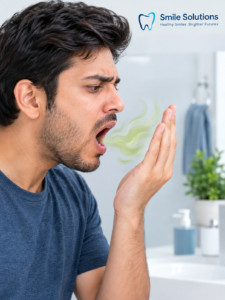
Why Do I Have Bad Breath Even After Brushing?
If you brush regularly but still have bad breath, the problem may be coming from somewhere that your toothbrush does not completely clean.
Some of the most common causes include:
- Bacteria on the tongue
- Plaque between the teeth
- Gum disease
- Tooth decay
- Dry mouth
- Food trapped between teeth
- Smoking or tobacco use
- Certain foods and drinks
- Dentures that are not cleaned properly
- Certain medications or health conditions
Let’s look at each cause in more detail.
1. Bacteria on Your Tongue
Your tongue has a textured surface where bacteria and food particles can accumulate.
Even if you brush your teeth carefully, bacteria can remain on the tongue and contribute to unpleasant-smelling compounds.
This is one reason dental professionals often recommend gently cleaning your tongue as part of your daily oral hygiene routine.
What can you do?
Gently clean your tongue once a day using a tongue scraper or tongue cleaner.
Avoid scraping aggressively because the goal is to clean the tongue, not irritate it.
2. Plaque Between Your Teeth
Your toothbrush cannot effectively reach every surface between your teeth.
Food particles and plaque can remain in these areas and contribute to bad breath.
Cleaning between your teeth every day with floss or interdental brushes can help remove plaque and trapped food.
If you brush twice a day but never clean between your teeth, this could be one reason why do I have bad breath even after brushing remains a problem for you.
3. Gum Disease
Persistent bad breath can sometimes be a sign of gum disease.
Gum disease can cause symptoms such as:
- Bleeding gums
- Red or swollen gums
- Tender gums
- Persistent bad breath
- Bad taste in the mouth
- Receding gums
- Loose teeth in more advanced cases
Gum disease is commonly associated with plaque buildup around the teeth.
If you have bad breath together with bleeding or swollen gums, it is a good idea to arrange a dental examination.
4. Tooth Decay or Dental Infection
A cavity or dental infection can sometimes contribute to an unpleasant smell or taste in the mouth.
If you have bad breath together with:
- Toothache
- Sensitivity
- A damaged tooth
- Swelling
- Bad taste
- Pain when chewing
you should have the tooth examined by a dentist.
Simply brushing more frequently will not treat an underlying cavity or infection.
5. Dry Mouth
Saliva helps keep your mouth naturally clean.
When your mouth becomes dry, bacteria and food particles may accumulate more easily, which can contribute to bad breath.
Dry mouth can have several causes, including dehydration, certain medications, mouth breathing and some medical conditions.
If your mouth often feels dry, try drinking water regularly and discuss persistent symptoms with a healthcare professional or dentist.
6. Smoking and Tobacco
Smoking can contribute to bad breath and can also negatively affect gum health.
Smoking is associated with an increased risk of gum disease, while tobacco smoke itself can leave an unpleasant odor.
If you smoke and have persistent bad breath, improving oral hygiene alone may not completely solve the problem.
Quitting smoking can benefit both your oral and overall health.
7. Strong-Smelling Foods and Drinks
Some foods naturally leave strong odors in the mouth.
Examples include:
- Garlic
- Onions
- Certain spices
- Coffee
- Some alcoholic drinks
These odors are usually temporary.
However, if your bad breath continues long after eating or drinking these foods, there may be another underlying cause worth investigating.
8. Not Cleaning Dentures Properly
If you wear removable dentures, they also need regular cleaning.
Food particles and bacteria can accumulate on dentures and contribute to unpleasant breath.
Dentures should be cleaned according to your dentist’s instructions and generally should not be worn continuously overnight.
9. Certain Medications
Some medications can contribute indirectly to bad breath by causing dry mouth.
If you recently started a medication and noticed that your mouth has become unusually dry or your bad breath has changed, speak with your doctor or dentist.
Do not stop prescribed medication without medical advice.
Why Does My Breath Smell Bad Even After Brushing and Mouthwash?
Mouthwash can help freshen your breath, but it should not be considered a replacement for brushing and cleaning between your teeth.
Some mouthwashes can temporarily mask bad breath, while therapeutic mouthwashes may help reduce certain causes depending on their ingredients.
If you constantly need mouthwash to hide an unpleasant smell, it may be better to find out what is causing the problem.
For example, if gum disease or tooth decay is responsible, treating the underlying dental problem is more important than simply masking the smell.
How to Get Rid of Bad Breath
If you’re asking why do I have bad breath even after brushing, start with the basics of good oral hygiene.
Brush twice a day
Brush your teeth for approximately two minutes twice a day using fluoride toothpaste.
Clean your tongue
Gently clean your tongue once a day to help remove bacteria and buildup.
Clean between your teeth
Use floss or interdental brushes daily to remove plaque and food from areas your toothbrush cannot reach.
Drink enough water
Staying hydrated can help if dry mouth is contributing to your bad breath.
Avoid smoking
Smoking can contribute to bad breath and gum problems.
Keep dental appointments
Regular dental examinations allow your dentist to identify problems such as gum disease, tooth decay or other oral conditions.
When Should You See a Dentist for Bad Breath?
You should consider seeing a dentist if your bad breath:
- Continues for several weeks
- Returns soon after brushing
- Is accompanied by bleeding gums
- Occurs with swollen or painful gums
- Comes with toothache
- Is accompanied by a bad taste
- Occurs with loose teeth
- Does not improve despite good oral hygiene
Persistent bad breath can sometimes be a sign of an underlying dental problem, particularly gum disease or tooth decay.
A dentist can examine your teeth, gums and mouth to determine whether there is an oral cause.
Can Bad Breath Be a Sign of Gum Disease?
Yes. Bad breath can be associated with gum disease.
Gum disease can develop when plaque accumulates around the teeth and irritates the gums. If it progresses, it can affect the tissues supporting the teeth.
If you have both bad breath and bleeding gums, don’t ignore the combination.
Getting your gums examined can help determine whether gum disease is contributing to the problem.
Frequently Asked Questions
Why do I have bad breath even after brushing?
The most common reasons include bacteria on the tongue, plaque between the teeth, gum disease, tooth decay, dry mouth, smoking, food particles, or other oral conditions. Brushing alone does not clean every area where odor-causing bacteria can accumulate.
How can I get rid of bad breath permanently?
The best approach is to identify and treat the cause. Good oral hygiene, tongue cleaning, daily interdental cleaning, hydration and regular dental check-ups can help. If gum disease, tooth decay or another dental problem is present, professional treatment may be necessary.
Does brushing your tongue help with bad breath?
Yes. Gently cleaning the tongue can help remove bacteria and buildup that may contribute to bad breath.
Can gum disease cause bad breath?
Yes. Gum disease can be associated with persistent bad breath and a bad taste in the mouth.
Can dry mouth cause bad breath?
Yes. Reduced saliva can make it easier for bacteria and debris to accumulate in the mouth, which can contribute to bad breath.
Does mouthwash cure bad breath?
Mouthwash can help control or temporarily reduce bad breath, depending on the product. However, it does not replace brushing and cleaning between the teeth, and persistent bad breath should be investigated rather than simply masked.
Dental Care at Smile Solutions
If you are still asking yourself, why do I have bad breath even after brushing, it may be time to have your teeth and gums professionally checked.
At Smile Solutions, our dental team can assess your oral health and look for common causes such as plaque buildup, gum disease, tooth decay or other dental problems.
You can learn more about Who We Are and our approach to patient-focused dental care before arranging your visit.
If you would like to discuss your symptoms or arrange a dental examination, visit our Contact Us page.
For patients looking for a dentist in Lahore, Smile Solutions Dental Clinic in Lahore provides a range of dental services, including general dentistry, gum care, dental implants, orthodontics and cosmetic dentistry.
Don’t Ignore Persistent Bad Breath
Occasional bad breath is usually nothing to worry about, particularly after eating strong-smelling foods. But persistent bad breath can sometimes indicate a dental problem that needs attention.
Good brushing is an excellent starting point, but remember that your tongue, gums and the spaces between your teeth also need attention.
If your bad breath continues despite good oral hygiene, arrange a dental check-up and find out what is causing it rather than simply trying to cover the smell.
Smile Solutions is here to help you maintain healthy gums, healthy teeth and a confident smile.